By Thomas Manuel

Introduction
Parliament of Knives is a text-based roleplaying game of political intrigue that pits players against each other to see who can exert the most influence on the fate of a nation. The characters are all politicians in a Grand Parliament in one nation of a fantastical world. They make and vote on proposals in a bid to steer the nation to their desired outcome. They form parties, leave parties, make deals, break deals, and even kill or be killed in their pursuit of getting the necessary votes they need to further their plans.
The players portray their characters and enact surprising plans and schemes while being careful to foster a welcoming, fun and safe atmosphere. The game facilitators adjudicate the rules, portray the external world and NPCs, ameliorate player conflict, and ensure a safe play space. The game should work best with between 15-30 players and is designed to be played over a chat application like Discord or Slack.
How do we play?
There are several parts to this game:
- The forum where the game is played
- The fictional world where the game is set
- The players and their characters
- The parties that players form
- The mechanics that govern the game
- The game facilitators and their responsibilities
Each of these is discussed below in this document.
Forum
The forum is a digital space where the game is played. It could be Discord server, a Slack room or a Discourse forum. It is set up to resemble the physical and social layout of a parliament building as well as the personal offices of the various political parties that make up the parliament. There are two kinds of spaces or channels: public and private. Public channels are visible and accessible to all members. Private channels are only visible and accessible to members who have explicit permissions.
Public channels are spaces like the central chamber of the parliament, the corridors of the parliament building, and so on. Private channels are spaces like party offices or other self-defined private spaces invented by the characters.
Note: Group messaging outside of the forum for out of character planning is a practice that is contra to the spirit of the game. If any player needs a channel accessible to only a specific group of players, the facilitators should create the channel for them as soon as they can.
(For a full template for the forum, see Appendix 1.)
Fictional World
The fictional nation represented by the Grand Parliament can be the one outlined in these rules or one that is invented by the game facilitators. It can be a part of a world that is as fantastical or mundane as desired but these rules assume that the characters have access to no magic or similar powers. They have to rely on their wits, words and, occasionally, rusty knives. It is the role of the facilitators to portray a believable world that is responsive to the actions of the Grand Parliament. It is suggested that the world contains a map that can be edited easily to show geopolitical changes.
The nation has six stats: Art, Commerce, Diplomacy, Faith, Industry, Military.
The stats range from 1-8 and start at 3. Every successful proposal passed by the parliament influences these stats - by increasing or lowering one or both. If any stat falls to 1, it triggers a Crisis which has to be handled appropriately through roleplay and proposals to avoid ending the game prematurely - with everyone losing.
(For two example nations, see Appendix 2.)
Characters
The characters in this game are all politicians in a Grand Parliament.
Character creation isn’t elaborate. It is as simple as choosing an archetype and answering a series of questions that act as creative sparks to inspire roleplay. The currently available playsets are:
| The Noble | |
|---|---|
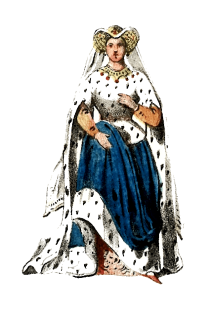
| The Noble is a member of a powerful and aristocratic house. They start with 3 Prestige. Questions: What is your noble house most famous for? What is your position within the noble house? What is your house’s best kept secret? |
 |
| The Rascal | |
|---|---|
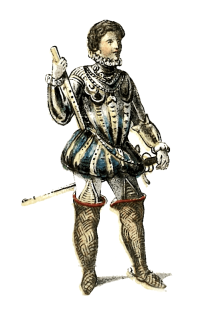
| The Rascal has reached their current position through wheeling and dealing. They start with 2 Prestige. Once a week, they can ask to know how one character voted in the previous week. Questions: What were the origins of your birth? What is the most outrageous trick you pulled off to achieve power? What mistake do you regret the most? |
 |
| The Soldier | |
|---|---|
| The Soldier is a former leader of the armed forces of the nation. They start with 2 Prestige. The cost for a viable Conspiracy against them is higher by 2. Questions: What code of honour do you follow? What was your noblest deed in battle? What circumstances turned you into a political leader? |
 |
| The Dreamer | |
|---|---|
| The Dreamer is an artist, poet or philosopher. They start with 2 Prestige. They get half-Prestige from voting but cannot be murderized or challenged to duels unless they choose. For voting, their prestige is rounded down. (Note: If a player might not be comfortable with their character dying, this is the archetype they should choose.) Questions: What are you famous for? What has gotten you into the most trouble with the government or the people? What is your favourite topic of conversation? |
 |
Parties
This game cannot be won alone. Characters will need to form parties. Parties are volatile alliances for a common cause. Within parties, players can figure out proposals and strategies. The Party creation process is simple. They just need a name, a logo and an objective.
A party’s objective is usually one of the following and they map onto the nation’s stats:
- Conquer the World (Military)
- Usher in a Golden Age of Art and Culture (Art)
- Achieve an Industrial Revolution (Industry)
- Institute a New State Religion (Religion)
- Become a World Leader through Peace and Goodwill (Diplomacy)
- Become the Economic Superpower (Commerce)
When a party raises the stat that matches their objective to their maximum value, they win the game. Multiple parties can share the same objective - which means that there can be multiple winners.
When characters leave a party, they lose Prestige, unless it’s a Schism. A Schism is when more than 25% of the party splits and forms a new party in which case no Prestige is lost (minimum 2 people).
Mechanics
So how does the game work?
The core of the game is very simple:
- Characters make proposals, which are potential laws or actions that the nation should take.
- The members of the Grand Parliament then vote on these proposals, passing some of them and rejecting the others. But the gap between proposing something and getting it passed is where most of the game will happen. In this gap, players will form alliances to aid their plans or start conspiracies to tear down the plans of others.
- Being successful in making and passing proposals earns characters Prestige. Prestige makes it easier for them to pass future proposals.
Every round of the game takes place over one week. One IRL week can be treated as one in-game month. A week / round should look roughly like this:
Day 1-3: Members declare Proposals. Day 4-6: Voting opens. Members speechify, scheme, ally, lie to get other Members to vote on what they want. Day 7: Voting closes. Successful proposals are declared. Prestige is announced, if applicable. News is announced.
Proposals
Any member can make a Proposal. The aim of a Proposal is to earn Prestige for the player and to help the Party get closer to winning. Every proposal has consequences - both in terms of moving the fiction of the world forward and affecting the stats.
When making a proposal, a character declares the title of the proposal and explains their reasons behind proposing it. They also declare which stat they want the proposal to raise and which stat they want to lower.
Example:
Thomas is playing a character named Tilekai, a Noble who secretly dabbles in the dark arts. Tilekai is a part of a party, the Lock and Key Party, whose focus is on boosting Industry within the nation.
At the beginning of the week, posting as Tilekai, Thomas makes a proposal in the #main-podium channel of the Discord server. He describes how Tilekai walks up to the podium and makes a small speech about how if the nation legalized necromancy, the undead could be used as factory labour.
At the end of his post, he officially declares his proposal and the intended mechanical effect like so, “Proposal: Make Necromancy Legal [Aim: Increase Industry, Decrease Religion]”
Note: It is up to the player to have their character justify the out of character choice of stats through roleplay in-character. In this example, they might do so by declaring that the interdiction against necromancy is religious but if we legalize the act, the undead can be made to work in factories.
Optional Rule: Two characters from different parties can come together to make a Joint Proposal. Joint Proposals are the same as Standard Proposals except they target two stats to increase and two stats to decrease. (They cannot increase or decrease the same stat twice. It has to name four stats.) Joint Proposals still only give Prestige to one person for proposing them.
Once a proposal is made, it needs at least two other characters to respond with a :thumbsup: emoji for the proposal to make it to the voting form. This is to ensure that proposals that have no chance of succeeding don’t clutter up the voting form.
How do proposals affect the nation’s stats? Every proposal declares which stat the character intends to raise and which it intends to lower. For every successful proposal, the facilitators roll a d8 and compare it to the two stats mentioned in the proposal. If the number on the dice is greater than the stat to be raised, then the intended stat increases by 1. If the number on the dice is less than or equal to the stat to be lowered, then that stat is reduced by 1.
(For a list of sample proposals, see Appendix 3.)

Voting
Every week, characters vote on proposals, trying to pass the ones that benefit their party goals and earn them Prestige. Votes are private and cast via an external form where only the facilitators can see the result. Once cast, they cannot be taken back.
Prestige decides how many proposals a character can vote on and how much value their vote has. Yes, voting is not “one character one vote”. It’s “one prestige one vote”. A character with 10 Prestige has 10 times the voting power of a character with 1 Prestige.
Characters can divide their Prestige among different proposals. A character with 10 Prestige can use 5 Prestige on one proposal and another 5 Prestige on another proposal. This can be done in any combination.
Example:
There are three proposals - A, B, C. Barnabus, a Noble, has 9 Prestige. He can vote with all 9 Prestige behind Proposal A. Or he can vote 3 Prestige among all three of them. Or he can put 6 Prestige behind A and 3 Prestige behind C. Whatever combination suits his plan.
The proposals with the two highest total votes (i.e. total prestige) at the end of the week are accepted.
Example:
Barnabus has proposed that “All healthcare should be free”. After voting, the votes for the proposals are 25 people of Prestige 1, 3 people of Prestige 2, 1 person of Prestige 3, and 1 person of Prestige 4. Therefore, the “total vote” on this proposal is: 25x1+3x2+1x3+1x4 = 25+6+3+4 = 38. If this one of the two highest voted proposals, it is passed!
Prestige
Prestige is a double-edged sword. In many ways, it is the measure of your success and power. The higher your prestige, the more your vote matters. But becoming too successful or powerful has a downside. You open yourself to jealous conspiracies. Once a character has reached Prestige 6, they become potential targets for Conspiracies.
Characters earn Prestige when:
- They make a successful proposal (+2)
- They vote on a successful proposal (+1)
Characters lose Prestige when:
- They quit their party (unless it’s a Schism) (-1)
- By burning Prestige during a Conspiracy (see Conspiracy rules)
- They lose a Duel of Honour (see Duel rules)
Conspiracies
When players want to get rid of another character completely, they begin a Conspiracy.
A Conspiracy is a plot against a specific Target. They can be violent (an assassination plot) or non-violent (a blackmail plot) or anything else the players can convince the facilitators off. The Target must have at least 6 Prestige.
When players want to start a Conspiracy, they notify a facilitator who creates a specific channel for it. As the conspirators convince other players to join the Conspiracy, they’re added to the channel.
When the Conspiracy has enough members equal to the Prestige of the Target, their plot is now viable. Eg: If the target has 10 Prestige, you need 10 members in the Conspiracy.
When the plot becomes viable, the Target is added to the channel and, together with the other members of the Conspiracy, they plan out their assassination or blackmail, etc. This might mean deciding where the assassination has to happen or what juicy details the blackmail contains. Once this is decided, the Target is killed or retires.
If the conspirators cannot find enough members, they can choose to burn Prestige to make up for it. Eg: If a character is a Soldier has a Prestige of 6, they need 8 people to be brought down. If the conspiracy reaches 4, the conspirators can choose to burn 4 Prestige (divided in any ratio among themselves) and force the plot to succeed.
Regardless of the Prestige of the Target, the minimum number of conspirators required is 4. Eg: If the target has 6 Prestige, 2 people cannot form a Conspiracy and succeed by burning 2 Prestige each. At least 4 conspirators are required for the plot to become viable.
Duels of Honour
Duels of Honour are the noble’s favourite way of reducing the Prestige of opposing characters. This means a Duel of Honour has been called. You can only challenge characters of higher Prestige than you. When a Duel is called, both parties must name a “second”. If either lose, their second can issue a follow-up Duel challenge to the winner. Nobody else can challenge the original winner or loser for the next 7 days.
The two characters go to the Duelling Court and draw their weapons. The duel is resolved through dice. Each player rolls 5d6. After they roll, they count how many dice are either 4,5 or 6. Each such die counts as a Hit. The player with the lower number of Hits is considered to be losing. If players start with a tie, then they reroll dice and take the new results.
So, after the first round of dice rolling, the losing player has a choice: lose gracefully or escalate. If they lose gracefully, they lose Prestige equal to the number of Hits scored by their opponent (but you cannot go below your starting Prestige). If they escalate, they get to choose to reroll any of their 5 dice that aren’t Hits. After rerolling, they might still be losing or be winning. If they are still losing, they can again either lose gracefully or escalate again. If they are still losing after this, they have lost the fight. They must now decide if they die or fall back to their starting Prestige (based on their playset).
If they were at any point winning, the other player must choose whether to lose gracefully or escalate. They too cannot escalate more than twice. When escalating, if there is a tie, the type of tie matters. If you are advancing to a tie, that’s a win. If you are remaining at a tie, that’s a loss.
Each player can only escalate twice.
Here’s an example duel:
Rattle (Prestige 5) challenges Bones (Prestige 10) to a duel. Rattle nominates Kell as their second, Bones nominates Zin.
In the first round, Rattle rolls 5d6 getting 5,4,3,1,1 which is 2 Hits. Bones rolls 5d6 getting 3,1,1,1,6 which is 1 Hit. Bones could choose to lose gracefully and take -2 to Prestige putting them at 8. Or they can escalate. Bones decides that they aren’t going to lose and escalates!
Bones has 1 Hit (a 6) so they set that dice aside and reroll 4d6 getting 2,2,3,4 which is 1 Hit, taking their total to 2 Hits. This is now a tie. But if you advance to a tie from losing, you are considered to be winning. So now Rattle has a choice: lose gracefully (-2 Prestige) or escalate! They choose to escalate!
Rattle keeps the 2 Hits (5,4) and rerolls 3d6 getting 3,3,1 which 0 new Hits. So it is still a tie but if you remain at a tie, you are still losing. Rattle is desperate and chooses to escalate again - the last time they can do so! They reroll 3d6 and get 4,6,2 which is 2 Hits. They now have 4 Hits. Now, Bones can lose gracefully and take -4 to Prestige, dropping them to 6 Prestige. Or they can escalate but if they are still losing after escalating, they will either die or go back down to starting Prestige which for them was 2. Ouch. Bones, filled with regret, chooses to lose gracefully. Rattle wins!
Now Zin, Bones’ second, can challenge. Rattle to follow-up duel but they decide against it. The duel ends here.
Note: If using the Sidekick bot on Discord, you can use a command like “/r xd6>3” to roll and count Hits at once, where ‘x’ is the number of dice.
News
Every week, after the results of the vote are announced. Game facilitators will post a series of updates in the “News” channel. These take two forms. One is a report on the proposals and how they affected the stats that week.
Example:
“Immigration and Utilization of Necromancers” introduced by member Obram has been implemented but while the intended goal was to boost the industrial output of the nation that hasn’t happened. While necromancers have been entering the nation, people have stopped patronizing businesses that employ them. This has been a hit to the commercial base of our economy.
The News could also maintain smaller tidbits or hooks for players to use in their roleplay. These provide opportunities for players to use these details when making proposals.
Example:
“The Rolan Empire has amassed soldiers on our southern border.” or “A cult of devil worshippers has taken root in our Capitol.”
Optional Rule: Rumours - This is a fun way of letting players seed false or true rumours or allegations against each other anonymously. The facilitators can create a special channel (with write but not read permissions) or a form as a way for players to submit rumours about the parliament. These rumours are revealed publicly at the same time as the News is posted.
Ending the Game
The game ends when a party maximizes the stat related to their objective or when a stat is lowered to one and the players are not able to turn it around in the next week.
Facilitators
Last but not the least, the game also requires facilitators to perform a number of functions including:
Moderate the Community: The Discord server like any server or offline community space needs to be maintained. This involves both technical tasks like the creation or deletion of channels and social tasks like handling complaints from members. A fun and safe playing environment involves a lot of different factors that probably go beyond this ruleset.
Here is the beginning of some Principles of Play that facilitators can share with their players:
Principles of Play
Social Game: Parliament of Knives is a team-based game of social alliances and deceptions. The characters try to gain Prestige and earn a victory by fulfilling their party’s objective. While they do this, they try to ensure the country doesn’t collapse - because if that happens, everyone loses.
Keep OOC friendly: Though this game encourages you to be a sneaky character, the OOC channels are snark-free zones. They’re channels for friendliness and warmth among players. Your characters might not be friends, but you all should be! So to ensure this, you’re asked to refrain from mean jokes, heavy sarcasm or sniping in the OOC channels.
Lore has to be confirmed: The lore of the world is limited. We have the Basic Truths and the information channels. Characters are free to invent details of the world as they play but all of these are details are liable to be overruled by the facilitators. If you’re doubtful of a detail invented by you or another character, ask a facilitator.
You can add or change these as per the needs of your game!
Track Votes and Prestige: Facilitators need to handle the backend work of votes, proposals and prestige. This includes setting up voting forms every week, calculating which proposals have been passed and maintaining an accurate tally of Prestige.
Simulate Responsive World: The world responds to the actions of the council. Facilitators communicate this through the News, which are text updates that can be delivered through an NPC or just narrated as a report. The game facilitators decide how the world will respond to the events of the Parliament and how that response should manifest. Facilitators should ensure that in their portrayal of a dynamic world, they don’t overshadow the actions of the players or make their choices feel meaningless.
Flow of Play
The facilitators decide that the game is set in a fantasy kingdom reminiscent of classic Tolkien fantasy with humans, dwarves and elves. They set up the server, decide on some basic lore and then invite players.
Players join and then make characters and parties - through some approval process decided by the facilitators. The players are let loose on the server. They meet each other, join or merge parties and generally form some basic alliances.
The facilitators announce that proposals are open. The players formulate proposals - some after discussion with their party members, some proceeding alone. They then post these proposals in character in the appropriate channel, trying to sway the other players. If they get two :thumbsup: reactions on their proposal from other players, the proposal is added to the voting form.
Multiple proposals are made. As these come in, players try to figure out which one is most useful to them (in terms of their party objective) as well as which one will actually pass. There’s no reason to vote for a losing proposal after all. Players reach out to each other and try to see how others are voting and trying to garner votes on their own proposals. Then, as the week draws to a close, everyone submits their vote - making sure to not miss the deadline.
The facilitators study the votes and see which two proposals are going to pass. Then, they post the results in the appropriate channel and award Prestige to the players who need to get them. Then, they post News, which gives players an idea of how the world is reacting to their actions. With that, the players restart their scheming - making proposals, getting votes, etc. But this time, they might look at the more successful players and begin to plot conspiracies against them.
Appendices
Appendix 1: Forum / Chat Server Template
- Server
- Rules
-
Announcements
- Admin Log
- General
- Welcome
- Game Talk
- Offtopic Talk
- Questions
- Recruitment
- Character and Party Info
- Character Biographies ( with Portraits)
- Party Info
- Information
- News
- Active Proposals
- Nation Stats
- Prestige Rankings
- Grand Parliament
- Entrance Hall
- Courtyard
-
West Corridor
-
East Corridor
-
North Corridor
-
South Corridor
- Duelling Court
- Central Chamber
- Main Podium
-
Front Benches
-
Middle Benches
- Back Benches
- Private Channels
- Meeting Room 1
- …
- Party Channels
- party-1-ooc
- party-2-ooc
- …
- Event Channels
Appendix 2: Sample Nations
The Kingdom of Bysmia: Surrounded by other nation, Bysmia lies at the heart of the world of Thurranir. It’s a land of harsh winters and fleeting summers. In the mountains, the mines churn out the legendary Bysmian Black Iron. After discontent against the King simmered for years, the nobles of Bysmia stoked up a rebellion that burned across the land. They used the opportunity to depose the king and institute a parliament - supposedly to represent the people, but in actual fact, the parliament is mostly full of nobles trying to enact their own personal glories.
Basic Truths
- Thurranir is a fantasy world inspired by traditional European/Tolkienesque fantasy. The world is a magical place but almost all regular people are mundane.
- Bysmia is cold, hard land - a bit like the stereotypes of Russia.
- This is one of the first, if not the first, parliament. This type of government is new to everyone.
The Banquo Federation: Among the stars, the people of the planet Banquo have set aside their differences and formed a worldwide government in the face of inter-planetary conflict. Banquo is a diverse planet with varied biomes and cultures. Banquo sits at the edge of one galaxy and another and operates as an important trade hub for rare materials and technologies going back and forth. But there are strange rumours of something dark that has been swallowing up ships not too far from Banquo.
Basic Truths
- Banquo is a sci-fi setting with Star Trek levels of technology.
- There are all kinds of peoples and cultures on Banquo - but everyone is basically human.
- A strange threat looms in the distance.
Appendix 3: Sample Proposals
Appoint a National Writer (Raise Art, Lower Religion)
Research Airships (Raise Military, Lower Commerce)
Tax Diamonds (Raise Commerce, Lower Diplomacy)
Trade Coal with [Other Nation] (Raise Diplomacy, Lower Industry)
Credits
I’d like to thank
License:
This entire work including all text is licensed under a Creative Commons Attribution-ShareAlike 4.0 International License.
If you’d like to hack this game, feel free! And tell me about it if you get the chance! Reach out on twitter @chaibypost or on discord @Tea#9357.